


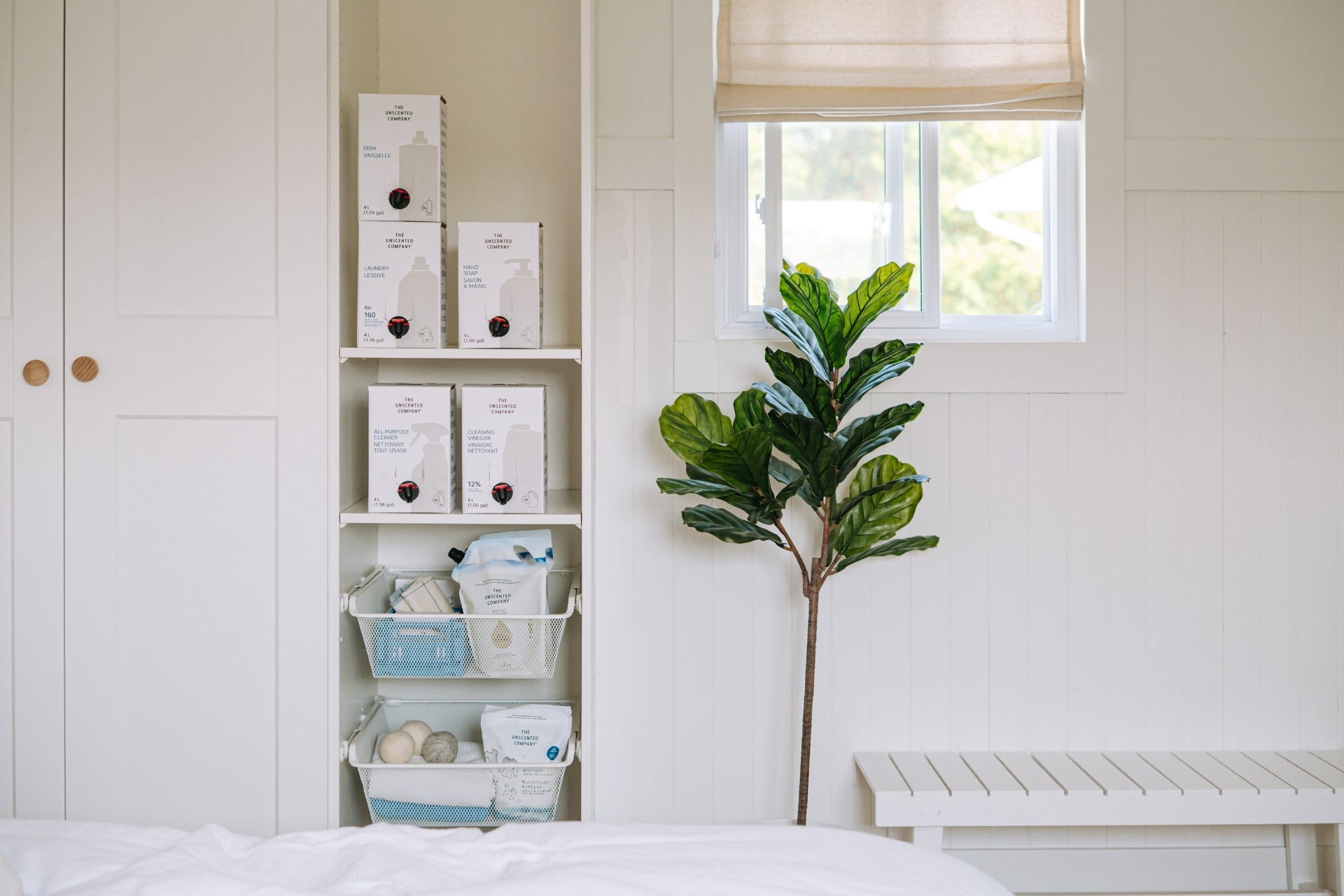
Creating an at-home refill station transforms how your family consumes products daily. Instead of constantly buying new bottles and containers, you fill reusable ones from larger refill boxes. This simple shift reduces plastic waste while saving time and money.
The concept is straightforward but powerful. An at-home refill station consolidates your household essentials: cleaning products, personal care items, and laundry supplies, all in one organized space. You purchase products in bulk, store them safely, and refill smaller bottles as needed. It's a practical solution that works for families of any size, from apartments to larger homes.
Table of contents
- Why an at-home refill station makes sense
- Setting up your at-home refill station
- Organizing products by category
- Maximizing your space
- Making it work for your family
- Conclusion
- FAQ
Why an at-home refill station makes sense
An at-home refill station addresses three major pain points: mental load, finances, and environmental impact. For busy households, having everything in one place reduces decision fatigue. You know exactly what you have and when you need to reorder.
The financial benefit is significant. Buying products in bulk costs less per unit than purchasing individual bottles repeatedly. Over a year, families report saving 30 to 50 percent on household and personal care products. When you factor in free shipping thresholds (often $95 for Canadian orders) the savings compound quickly.
From an environmental perspective, an at-home refill station eliminates single-use plastic bottles. Each refill you make prevents one plastic container from entering landfills. For a family using six or more products daily, that's thousands of bottles avoided annually. Teaching children this connection between their choices and environmental impact creates lasting awareness. This approach aligns with responsible laundry practices that reduce your household's overall environmental footprint.


Setting up your at-home refill station
Location matters more than you might think. The ideal spot is accessible, well-lit, and away from direct sunlight. Many families use under-sink cabinets, closet shelves, or dedicated pantry space. If you live in a small apartment, two smaller stations work better than one large one. One for bathroom and laundry, another for kitchen.
Dominique, a mother of six and organization specialist from Les belles combines, keeps her at-home refill station under the stairs. Three shelves hold everything her family needs. She also uses the space above her washer and dryer, installing a shelf to maximize vertical storage. The key is keeping the area near pumps and spouts so filling bottles doesn't create mess.
You'll need a few essentials to start. Reusable bottles in various sizes (500ml, 1 liter, 2 liters) form the foundation. Refill boxes or pouches in larger volumes (2, 4, or 10 liters) store your products. Labels help identify contents, especially for young children. A small funnel and cloth prevent spills during transfers.

Organizing products by category
Grouping products by function makes your at-home refill station intuitive. Most families organize into three main categories: household cleaning, personal care, and laundry.
Household cleaning products include all-purpose cleaner, glass cleaner, and disinfectant. Keeping these together means you grab what you need without searching. Many people add cleaning cloths and brushes to this section for convenience. For creative applications, explore 12 clever ways to use cleaning vinegar in your daily routine.
Personal care items encompass hand soap, body wash, shampoo, and conditioner. These products are used daily, so accessibility matters. Storing them near bathrooms reduces trips throughout the house.
Laundry supplies include detergent, fabric softener, and stain remover. Adding wool dryer balls and blocks of Marseille soap, excellent for stubborn stains, keeps everything laundry-related in one spot.
A simple table helps visualize your organization:
|
Category |
Products |
Refill Size |
Frequency |
|
Household cleaning |
All-purpose cleaner, glass cleaner |
4-10 liters |
Every 2-3 months |
|
Personal care |
Hand soap, body wash |
2-4 liters |
Monthly |
|
Laundry |
Detergent, fabric softener |
4-10 liters |
Every 2-3 months |
|
Specialty items |
Marseille soap, wool balls |
As needed |
Annually |
Maximizing your space
Small spaces require creative thinking. Under-sink cabinets work well if you add shelving or use stackable containers. Wheeled carts fit into closets and roll out when needed. Wall-mounted shelves above appliances add storage without taking floor space.
Stacking refill boxes vertically saves significant space. Label each box clearly so you know what's inside without opening them. Clear containers let you see product levels at a glance, helping you plan refills before you run out.
Temperature and light matter for product longevity. Store your at-home refill station in a cool, dry place away from direct sunlight. Most natural products maintain quality for two to three years when stored properly. Write the date you first open each refill box on the label. This simple habit helps you track consumption patterns and plan future purchases more accurately.

Making it work for your family
An at-home refill station becomes truly valuable when your entire family understands and uses it. Involve children in the process. Show them how refilling works and why it matters for the planet. When cleanup time arrives, children can gather cleaning supplies from the station themselves.
Make filling bottles a shared responsibility. Older children can refill their own hand soap or body wash. Younger children enjoy the task under supervision. This involvement builds independence while reducing your workload.
Track your usage patterns for the first few months. Note how quickly your family uses each product. Some items deplete faster than expected; others last longer. This data helps you order the right quantities, preventing both shortages and overstock.
The transition to an at-home refill station typically takes two to three weeks. After that, most families find it faster and easier than their previous routine. The mental clarity of knowing exactly what you have, combined with the financial savings and environmental benefit, makes it worth the initial setup effort.
Conclusion
An at-home refill station represents more than just organized storage. It's a commitment to reducing plastic consumption, saving money, and simplifying your household routine. Whether you're a parent managing a busy household or someone seeking a more sustainable lifestyle, this approach delivers practical benefits immediately. Start small, involve your family, and watch how this simple system transforms your daily habits.
FAQ
How much money can I save with an at-home refill station?
Most families save 30 to 50 percent annually on household and personal care products. Bulk purchasing reduces per-unit costs significantly. Free shipping thresholds, often met with larger orders, add additional savings. The exact amount depends on your family size and product choices, but the financial impact becomes noticeable within the first month.
What's the best way to involve children in an at-home refill station?
Start by explaining the concept simply: refilling bottles reduces plastic waste and helps the planet. Let children help fill bottles under supervision. Assign age-appropriate tasks like gathering supplies or labeling containers. This involvement builds environmental awareness while teaching responsibility and reducing your workload.
Can I use an at-home refill station in a small apartment?
Absolutely. Create two smaller at-home refill stations instead of one large one. One station in the bathroom handles personal care and laundry products. Another in the kitchen manages household cleaners. Use wheeled carts that slide into closets or under sinks. Vertical storage with wall-mounted shelves maximizes limited space effectively.