


A baby’s sensitive skin requires special attention from the very first days. Thin, delicate, and still developing, it reacts quickly to irritation and changes in the environment. For parents, every product choice and every daily habit can make a difference.
Which soap should you use? Should you moisturize after bath time? How often? There are many questions, and pharmacy shelves, often filled with products making contradictory promises, do not always make things clearer.
This guide offers a simple, informed approach to building a suitable skincare routine: practical habits, well-chosen products, and routines that support your little one’s comfort every day.
Table of Contents
- Understanding a Baby’s Sensitive Skin and Why Gentleness Is Essential
- Sensitive Skin Care for Babies: How to Adapt the Routine
- Moisturizing: The Secret to Comfortable and Soothed Skin
- Choosing Products Formulated for Little Ones
- Mistakes to Avoid in Baby Skincare
- Conclusion
- FAQ
Understanding a Baby’s Sensitive Skin and Why Gentleness Is Essential
An infant’s skin is not simply a smaller version of an adult’s skin. It is structurally different, and those differences have practical implications for how it should be cared for.
Studies show that infant skin is thinner than adult skin. In addition, because the skin barrier is still developing, it is more sensitive to irritation and more permeable. Substances applied to it can therefore pass through the skin barrier more easily, which is why it makes sense to choose simple, well-tolerated formulas.
A baby’s skin also loses moisture more quickly and reacts more easily to friction. In Quebec, winter and its dry air can make this even worse, making hydration even more important.
For babies with sensitive skin, these characteristics are even more pronounced. Choosing fragrance-free products with short ingredient lists is a practical way to reduce the risk of irritation and support the skin barrier.
Sensitive Skin Care for Babies: How to Adapt the Routine
Bath time gives you a special moment of closeness and connection with your child, but a few basic principles help make sure your baby gets the full benefit from it.
Frequency: Contrary to what many people think, a newborn does not need a bath every day. Two to three baths per week are generally enough. Bathing too often can disrupt the still-fragile hydrolipidic film and make dry skin worse. Between baths, spot cleaning the face, hands, and diaper area with a clean, damp cloth is more than enough.
Water temperature: It should feel pleasant and comfortable, around 37 °C. You can check the temperature with your elbow or wrist, which are more sensitive than your hand. Water that is too hot can irritate the skin and cause vasodilation, which increases redness.
Duration: A bath of 5 to 10 minutes is ideal. Longer than that, it may dry out the skin.
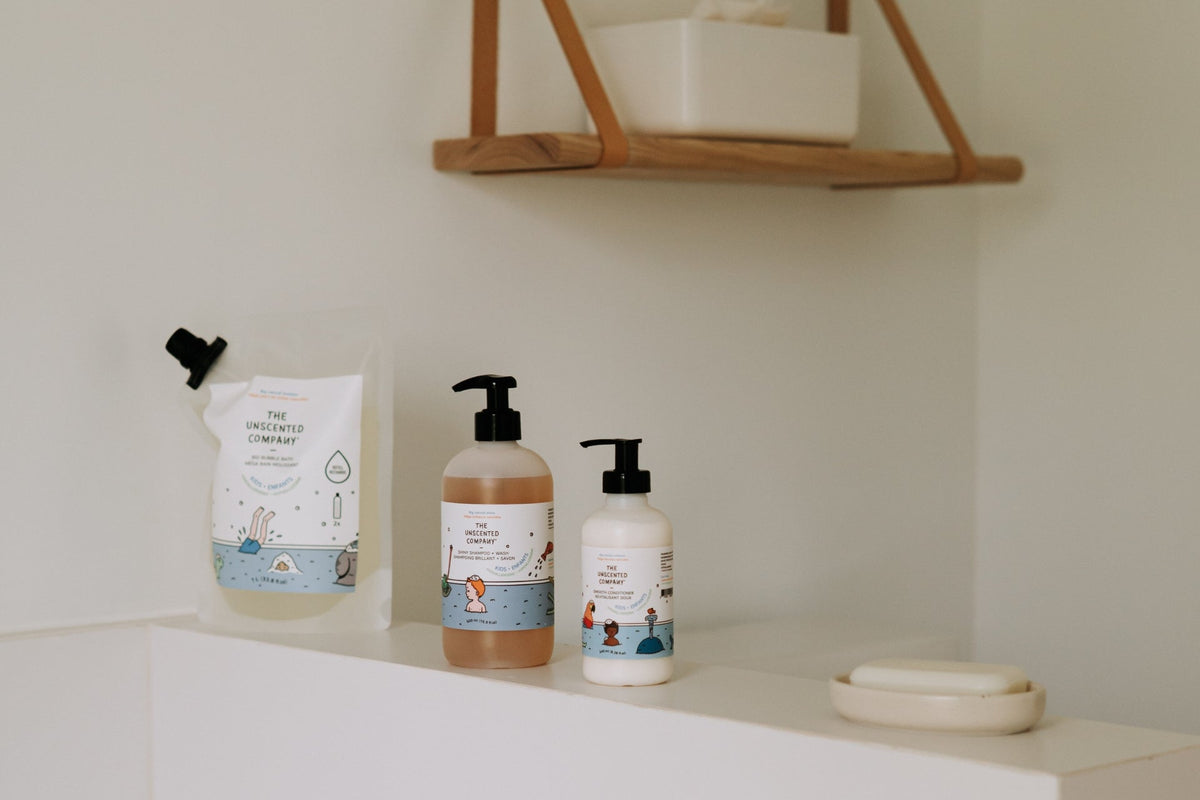
Product choice: For cleansing the body and hair, a 2-in-1 product specifically formulated for babies keeps the routine simple. Choose a gentle soap and shampoo designed to cleanse effectively without being harsh on the skin or scalp.

|
Step |
Practical Tip |
Why It Matters |
|
Frequency |
2 to 3 baths per week |
Helps preserve the hydrolipidic film |
|
Temperature |
37 °C (check with your elbow) |
Helps avoid irritation and burns |
|
Duration |
5 to 10 minutes |
Helps prevent skin dehydration |
|
Product |
Fragrance-free 2-in-1 formula |
Simplifies the routine and minimizes risk |
|
Drying |
Pat dry gently |
Helps avoid irritation from rubbing |
Moisturizing: The Secret to Comfortable and Soothed Skin
Moisturizing is the step most often overlooked, yet it is one of the most important when caring for a baby’s sensitive skin. After a bath, their skin quickly loses moisture. Applying a cream or lotion within minutes after drying helps lock in hydration and strengthen the skin barrier.
This skincare moment is also an excellent opportunity for massage. Skin-to-skin contact while applying a lotion stimulates the production of oxytocin, the bonding hormone, and supports your baby’s emotional well-being. Studies published in the Journal of Developmental & Behavioral Pediatrics have shown that regular infant massage supports development and improves sleep quality.
For moisturizing, product choice plays a key role. Choose a lotion or cream specifically formulated for babies, with a short ingredient list, no fragrance, and good tolerance for sensitive skin.
Simple formulas, without water or with very few irritating ingredients, nourish the skin effectively while minimizing the risk of skin reactions. The important thing is to choose a product suited to your baby’s still-fragile skin and apply it regularly to maintain comfort.
If your baby has areas of more significant dryness, such as the cheeks, elbows, or knees, you can apply a more generous layer to those specific spots. If dryness persists or red patches appear, it is always advisable to consult a pediatrician or dermatologist.
To discover products suited to your baby’s sensitive skin, explore our collection for children.
Choosing Products Formulated for Little Ones
The baby skincare market is vast, and it is not always easy to tell which products are truly suitable from those that simply rely on appealing packaging. Here are the key criteria to consider:
- Ingredient list: The shorter it is, the better. Every additional ingredient is a potential allergen. Choose formulas with fewer than ten ingredients.
- Fragrance-free: Fragrances, whether synthetic or natural, such as essential oils, are among the most common contact allergens. For a baby with sensitive skin, avoiding them is a basic precaution.
- Dermatological testing: Make sure the products have been tested under dermatological supervision and, if possible, specifically tested on sensitive skin.
- Appropriate pH: A baby’s skin has a slightly acidic pH, between 4.5 and 5.5. Products formulated with a compatible pH better respect the skin barrier.

To make life easier from the start, choose a gentle essentials set for children that brings together key products, a simple way to make sure everything you use on your baby meets the same standards of gentleness and quality.
Mistakes to Avoid in Baby Skincare
Even with the best intentions, some habits can be harmful to a baby’s sensitive skin. Here are a few to avoid:
- Washing clothes with an adult detergent: Laundry residue stays in the fibres of clothing and comes into direct contact with your baby’s skin. A gentle, fragrance-free detergent is a better choice.
- Applying pure essential oil: Even essential oils considered natural are not recommended for infants. They can trigger skin or respiratory reactions.
- Neglecting moisturizing in winter: The dry air in heated Quebec homes increases skin dehydration. In winter, it may help to moisturize your baby more often, or even use a humidifier in their room.

Conclusion
By adopting the right habits from the start, you help preserve the balance of a baby’s sensitive skin over the long term. A simple, consistent, and well-adapted routine helps limit irritation and provide lasting everyday comfort.
To discover products designed to simplify care and meet the needs of little ones, explore our online shop.
FAQ
How do you care for a baby’s sensitive skin?
Caring for a baby’s sensitive skin is based on simple, regular habits. It is recommended to use gentle, fragrance-free products made with few ingredients. After bath time, moisturizing helps keep the skin comfortable. A stable routine, without multiplying products, generally helps limit irritation and preserve the skin’s balance.
How often should you bathe a baby?
For a newborn, two to three baths per week are generally enough. Bathing too often can contribute to drying out still-immature skin. Between baths, spot cleaning with a damp cloth helps maintain good hygiene. The important thing is to follow a gentle routine adapted to the child’s rhythm and comfort.
Which products should you prioritize for a baby’s routine?
It is best to choose products formulated with few ingredients, fragrance-free, and dermatologically tested. Simple formulas are often better tolerated by delicate skin. Choosing suitable care products helps reduce the risk of irritation and maintain a consistent routine without piling on unnecessary products.