


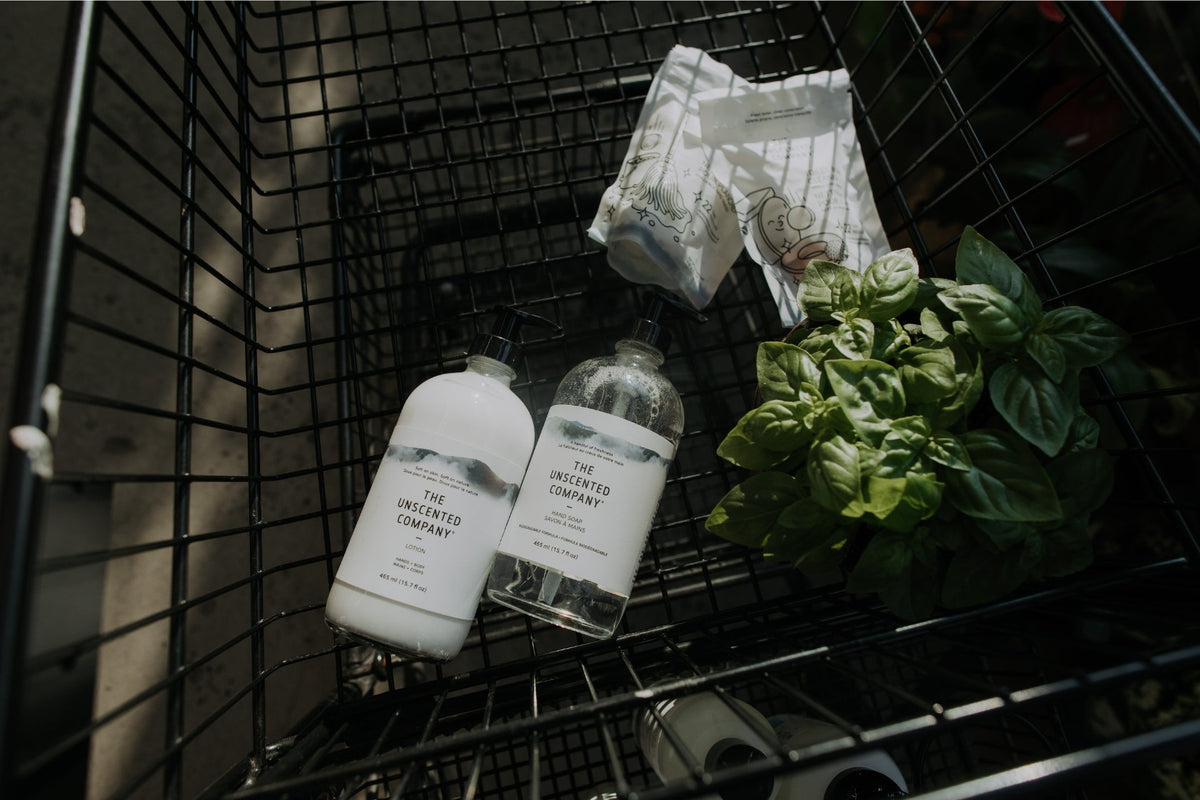
Labels on household products can sometimes feel difficult to decode at first glance. Between technical terms, ingredient lists, and marketing claims, it’s not always easy to understand what a product actually contains.
However, learning how to read them makes it easier to understand what you use every day—without needing to question everything. This guide provides clear reference points to help you interpret product labels and make more informed choices based on your needs.
Table of Contents
- Why pay attention to household product labels
- Key ingredients to watch on a label
- Common claims and what they mean
- Third-party certifications: a reliable guide
- Canadian regulations on household product labeling
- Conclusion
- FAQ
Why pay attention to household product labels
Learning to identify ingredient types and understand what they imply is a first step toward a healthier home environment.
An informed consumer is better equipped to make choices that suit their preferences.

Key ingredients to watch on a label
Understanding household product labels starts with recognizing common ingredients. Here are some of the most frequently used ones and what they mean.
- Surfactants: These are the main cleaning agents. They can be petrochemical-based (like sulfates, e.g., Sodium Lauryl Sulfate) or plant-based (derived from sugar or coconut oil). Their role is to lift dirt and grease.
- Solvents: They help dissolve dirt. Water is the most common solvent, but alcohols and glycols are also used. Some solvents may release volatile organic compounds (VOCs).
- Chelating agents: These neutralize minerals in hard water (calcium, magnesium), making surfactants more effective. EDTA is a common synthetic example.
- Enzymes: These proteins target and break down specific stains (e.g., protease for blood, amylase for starch). They are often used in laundry detergents.
- Fragrance (or parfum): The term “fragrance” on household product labels can refer to a mixture of multiple substances, often without full disclosure. For individuals sensitive to scents or irritants, this may cause discomfort. Choosing fragrance-free products can be a simple option depending on your preferences and tolerance.
Once you know how to interpret ingredients, it becomes easier to identify products that align with your preferences.
Explore our selection of products designed with simple and transparent formulations.
Common claims and what they mean
Household product labels often include marketing claims whose meaning can be unclear. These are not always strictly regulated and may vary between brands.
The table below highlights common examples to help you better understand them and make more informed choices.
|
Marketing claim |
What it usually means |
How to interpret it |
|
“Fresh scent” |
A generic term that doesn’t specify the composition of fragrance agents. |
Check whether the product is fragrance-free or if scent ingredients are clearly listed (e.g., essential oils), depending on your sensitivity. |
|
“Biodegradable” |
The product breaks down, but without details on conditions or speed. |
Look for a recognized certification (e.g., Ecologo) that supports this claim. |
|
“Professional strength” |
May suggest stronger performance without indicating composition. |
Check active ingredients and their actual role in cleaning. |
|
“Concentrated formula” |
Less product is used per wash, which can be beneficial. |
Confirm usage instructions and actual impact on consumption. |

Third-party certifications: a reliable guide
To better understand household product labels, third-party certifications can serve as a reliable reference. These certifications are issued by independent organizations that verify manufacturer claims based on clear and transparent criteria.
Here are some widely recognized certifications in Canada:
- Ecologo (UL): One of the most rigorous environmental certifications in North America, covering performance, health, and environmental impact.
- MADE SAFE: Ensures products are made without ingredients associated with certain health or environmental risks.
- Leaping Bunny: Guarantees that neither the product nor its ingredients were tested on animals.
- OEKO-TEX: Commonly used for textiles, but relevant for laundry products, ensuring no harmful substances remain in the finished product.
- USDA Organic: Certifies that ingredients meet strict organic agriculture standards.
The presence of one or more of these certifications on household product labels is a strong indicator of a brand’s credibility. While it doesn’t replace reading the label, it complements it effectively.
To go further, consider refill options, which help reduce packaging waste.
Canadian regulations on household product labeling
In Canada, cleaning products are primarily regulated under the Hazardous Products Act by Health Canada. This law requires the identification of ingredients that may pose health or safety risks.
However, unlike in the European Union, Canada does not require full disclosure of all ingredients on labels. This means that non-hazardous—but potentially irritating—ingredients may not always be listed.
That’s why some brands voluntarily publish complete ingredient lists, often using INCI naming conventions. This goes beyond legal requirements and reflects a strong commitment to transparency.
Conclusion
Learning how to read household product labels makes it easier to understand what you use daily and adjust your choices based on your preferences. Without needing to analyze everything in detail, a few key reference points can help you navigate available options.
By prioritizing simple and transparent formulations, it becomes easier to find products that match your expectations. To explore options focused on ingredient clarity, you can browse our full product range.
FAQ
Do household product labels really help compare products?
Household product labels provide useful insights, but they don’t always allow for full comparison. Some information may be presented in a general or partial way. Still, they are a helpful starting point for understanding composition and guiding your choices based on priorities like ingredient simplicity or fragrance-free formulas.
Is a fragrance-free product always a better choice?
A fragrance-free product may be preferable for individuals sensitive to scents or irritants, but it’s not an absolute rule. Fragrance doesn’t contribute to cleaning performance, but it can affect the user experience. Ultimately, the choice depends on personal preference and tolerance.
What does “plant-based” really mean?
The term “plant-based” indicates that an ingredient originates from a natural source like a plant. However, it may still undergo processing before final use. This information is helpful but should be considered alongside other label details to fully understand a product’s formulation.
How can I find more information about product ingredients?
If labels don’t provide full details, you can often check the manufacturer’s website, where some brands publish more complete ingredient lists. External resources like Environmental Working Group can also help explain the function and characteristics of certain components.