Imagine reaching for your favorite cashmere sweater, only to discover it has shrunk beyond recognition. Picture pulling a silk blouse from the dryer, only to find it felted and ruined. These scenarios happen far more often than most people realize, yet they are entirely preventable.
Delicate garments deserve special care. Many people unknowingly damage their finest pieces with improper washing techniques. Whether you own a cherished cashmere sweater, silk blouse, or fine linen dress, one wrong move can destroy these pieces in minutes. The good news is simple: learning how to wash delicate laundry properly is not complicated. It just requires the right technique. Developed in collaboration with Milo & Dexter and The Unscented Company, this guide covers everything you need to know about protecting your favorite fabrics, from water temperature and detergent selection to proper drying methods that prevent shrinking and damage.
Quick Answer
Hand washing is the safest method for how to wash delicate laundry. Use lukewarm water (maximum 30°C), choose a gentle pH-neutral detergent, soak for no more than 10 minutes, and always dry flat. Check the care label first for specific instructions tailored to your garment.
Summary
- How to Wash Delicate Laundry by Hand
- Machine Washing Delicate Fabrics
- Drying Delicate Garments Properly
- Caring for Specific Fabrics
- Stain Removal for Delicate Items
- Essential Tools and Products
- Conclusion
- FAQ
How to Wash Delicate Laundry by Hand
Hand washing is the safest method for delicate fabrics. Before you begin, always check the care label. It provides essential instructions for your specific garment.

Step-by-Step Hand Washing Process
Start by filling a basin with lukewarm water, never exceeding 30°C (86°F). Hot water is the primary culprit behind felting and shrinking, and once this happens, the damage is permanent. Choose a pH-neutral, gentle detergent specifically formulated for delicate fabrics. For protein-based materials like wool and silk, enzyme-free detergents are essential to prevent fiber degradation.
Submerge your garment and let it soak for a maximum of 10 minutes. Gently squeeze soapy water through the fabric using a pressing motion. Never scrub, twist, or wring your clothes, as friction causes pilling and fiber distortion that's difficult to reverse.
When rinsing, repeat the process 2 to 3 times using water at the same temperature. Sudden temperature changes cause thermal shock and can lead to shrinkage. For natural softening, add a splash of white vinegar to your final rinse.
Key Hand Washing Principles
|
Element |
Requirement |
|---|---|
|
Water Temperature |
30°C maximum (cold preferred) |
|
Detergent Type |
Gentle, pH-neutral, enzyme-free for protein fabrics |
|
Soaking Time |
10 minutes maximum |
|
Agitation |
Gentle pressing only, no scrubbing |
|
Rinsing |
2-3 times in same temperature water |
Machine Washing Delicate Fabrics
Machine washing is acceptable only if the care label explicitly permits it. Look for labels stating "Machine Wash Cold" or "Delicate Cycle."
Select the "Delicate" or "Hand-Wash" cycle with cold water or 30°C maximum. Turn garments inside out and place them in a mesh laundry bag for protection. Use the lowest spin setting (400 RPM or less) to prevent stretching and damage.
Don't overload the machine. One or two delicate items per load is ideal. Never use regular detergent or fabric softener, which can damage delicate fibers and leave residue that's hard to remove.
Drying Delicate Garments Properly
This is where most damage occurs. Never hang wet delicate laundry or use a dryer, even on low heat.
Gently press your garment against the sink to remove excess water. Lay it flat on a clean towel, roll the towel and garment together, and press gently to absorb moisture. Unroll and reshape the garment while damp, then lay it flat on a dry towel or mesh drying rack away from direct heat and sunlight.
Allow 24 to 48 hours for complete drying depending on fabric thickness and humidity. This might seem like a long time, but it's the only way to ensure your garments maintain their shape and integrity.
Caring for Specific Fabrics
Different fibers have unique characteristics worth understanding.
Wool
Wool is often said to be antimicrobial and odor-resistant, so you don't need to wash it as often as you might think. Wash only after 5 to 10 wears unless visibly soiled. Use a wool-specific detergent and never exceed 30°C water temperature. Lay flat to dry to maintain shape.
Silk
Silk requires gentle handling throughout the entire process. Hand wash in cold water with enzyme-free detergent. Never wring or twist the fabric. Gently press out excess water instead. Air dry flat to preserve its lustrous sheen.
Cashmere
Cashmere is exceptionally delicate and deserves extra attention. Hand wash in cold water with gentle detergent. Gently squeeze excess water without wringing. Dry flat on a towel away from direct sunlight. For minor shrinkage, soak in cool water with hair conditioner for 20 minutes, gently stretch it back to size, and lay flat to dry.
Fine cotton and linen
Fine cotton and linen are more durable but still benefit from gentle care. Use cool or lukewarm water (max 30°C) with gentle detergent. Machine washing on a delicate cycle is acceptable if the label permits. Air dry or lay flat.
Stain Removal for Delicate Items
Act fast when stains occur. Always dab, never rub, as aggressive cleaning felts wool and damages fibers.
Before treating any stain, test your cleaning solution on a hidden area to ensure it won't cause discoloration.
Oil or grease stains respond well to cornstarch. Sprinkle it on the stain, let it sit for 15 minutes, brush off gently, then dab with cool water and soap. For coffee or tea stains, blot immediately and then dab with a 1:1 solution of white vinegar and cool water. Mud stains should dry completely before you attempt to remove them. Brush off the excess, then rinse with cool water. When in doubt, blot and stop.
For stubborn stains, try our stain remover bar designed specifically for delicate fabrics.

Essential Tools and Products
Having the right tools makes washing delicate laundry easier and more effective.
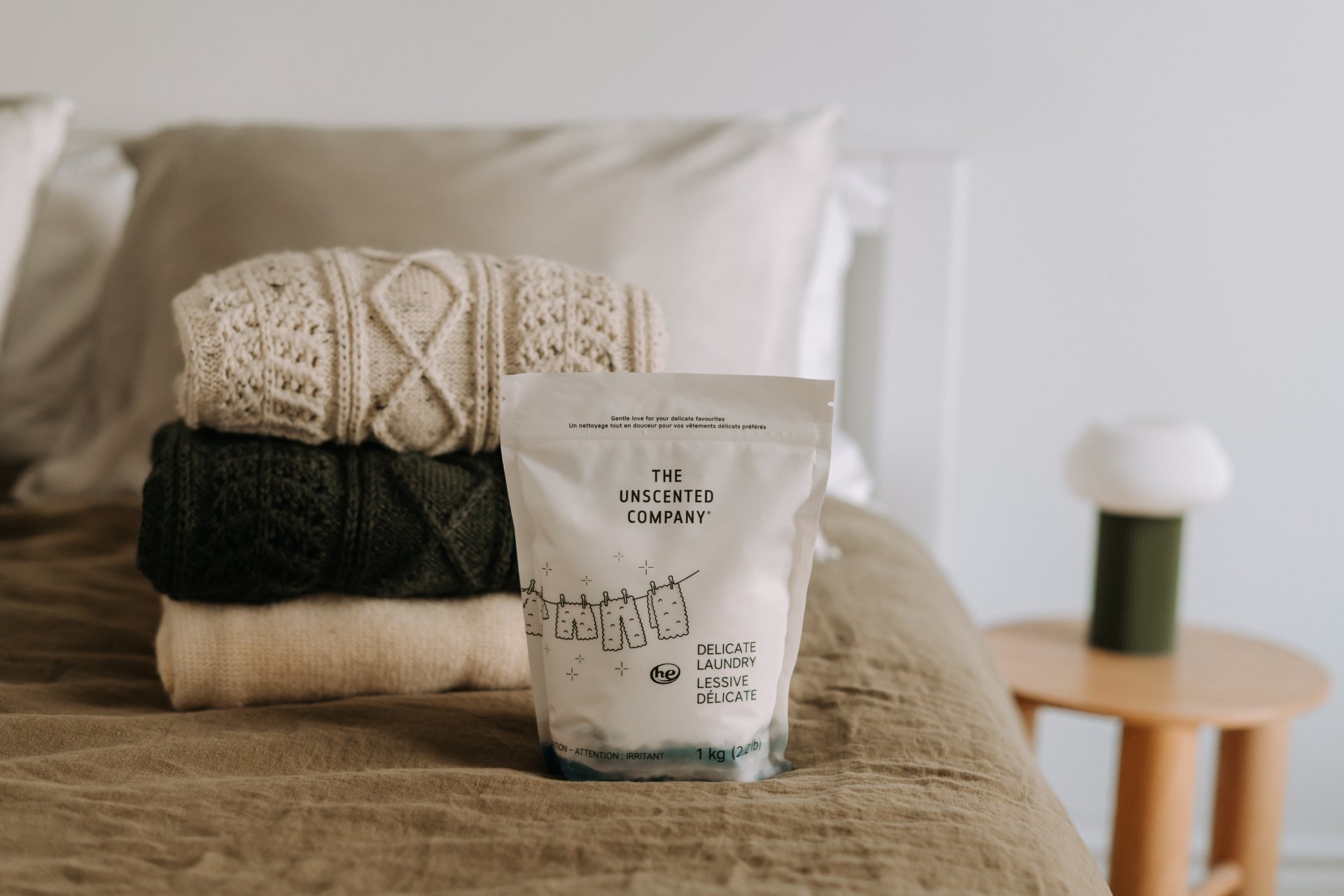
A gentle detergent formulated specifically for delicate fabrics protects fibers while removing dirt. Select pH-neutral, enzyme-free options for protein-based fabrics. A mesh laundry bag protects delicate items during machine washing and is essential for anyone machine-washing delicate garments. A sweater drying rack provides a flat drying surface that speeds up the drying process and maintains garment shape.
Other items worth having include white vinegar (natural softener), a fabric shaver (removes pilling gently), and cedar blocks (natural moth prevention).
Conclusion
Learning how to wash delicate laundry properly is an investment in your wardrobe's longevity. By understanding the specific needs of different fibers (whether wool, silk, cashmere, fine cotton, or linen), you can confidently protect your favorite pieces for years to come.
Remember these key principles: the care label is your best friend, lukewarm water is non-negotiable, gentle handling is essential, and flat drying is the only safe method. Start with the right tools and techniques. Your delicate garments will reward you with lasting beauty and comfort.
If you would like personalized recommendations for your specific delicate fabrics, contact us to speak with our laundry experts.
FAQ
How do I properly learn how to wash delicate laundry without damaging my favorite pieces?
Follow three essential principles: use cold or lukewarm water (maximum 30°C), choose a gentle pH-neutral detergent appropriate for your fabric type, and always dry flat. Check the care label first for specific instructions. By following the step-by-step methods in this guide, whether hand-washing or using a delicate cycle, you will protect your garments and extend their lifespan significantly.
What's the difference between detergent for protein-based versus plant-based fabrics?
Protein-based fabrics like wool, silk, and cashmere require enzyme-free detergents because enzymes break down protein fibers over time. Plant-based fabrics like cotton and linen can use gentle detergents with enzymes, which help break down stains. Always choose a pH-neutral formula and avoid harsh commercial detergents that strip protective oils from delicate fibers.
Can I fix a shrunken delicate garment?
Minor shrinkage can sometimes be reversed. Soak the garment in cool water with hair conditioner for 20 minutes, gently stretch it back to size, and lay flat to dry. However, if the fabric is felted (stiff and dense), the damage is permanent and irreversible. Prevention through proper washing techniques is essential.
How often should I wash delicate garments?
Wool is naturally self-cleaning, so wash only after 5 to 10 wears or at season's end. Silk and cashmere similarly benefit from infrequent washing. Air them out between wears and wash only when necessary. Fine cotton and linen can be washed more frequently but still benefit from less frequent washing to preserve quality and extend lifespan.