


Choosing a laundry detergent for eczema is an important decision for people living with this condition. Poorly rinsed clothing, lingering fragrance, or harsh foaming agents can be enough to trigger itching that is already difficult to manage.
The good news is that there are clear guidelines for selecting a detergent suitable for reactive skin. This guide covers the key criteria to know, ingredients to watch for, and simple habits that can help reduce sources of irritation.
Table of Contents
- Why laundry detergent for eczema makes a difference
- Which ingredients to look for in detergent for sensitive skin
- Laundry detergent and eczema in adults and babies
- Daily laundry habits to adopt
- Conclusion
- FAQ
Why Laundry Detergent for Eczema Makes a Difference
Eczema, or atopic dermatitis, is characterized by a weakened skin barrier. The skin retains less moisture and allows substances it comes into contact with to penetrate more easily.
Clothing, bedding, and towels remain in direct contact with the skin for many hours every day. As a result, detergent residue left behind in fabric fibers after washing can become a constant source of irritation.
Three elements typically receive the most attention from people with atopic skin: fragrances, whether synthetic or naturally derived; harsh surfactants; and dyes or optical brighteners added to make fabrics appear whiter.
A suitable detergent does not cure eczema, but it helps reduce exposure to these potential triggers. As part of a broader approach, detergent is only one factor among others, including water temperature, fabric selection, and washing frequency. Each of these factors influences the amount of residue retained in fabric fibers.

Which Ingredients to Look for in Detergent for Sensitive Skin
Choosing a detergent for sensitive skin starts with reading the ingredient list.
Key Criteria for a Laundry Detergent for Eczema
Here are the elements generally sought in a hypoallergenic detergent:
- a fragrance-free formula rather than a “lightly scented” one, since even mild fragrances contain potentially irritating compounds
- plant-based surfactants rather than highly foaming sulfates
- no dyes or optical brighteners, which have no cleaning function
- a concentrated formula, allowing smaller doses and reducing residue left in fabrics
- the use of INCI (International Nomenclature of Cosmetic Ingredients) terminology, making ingredient lists easier to understand
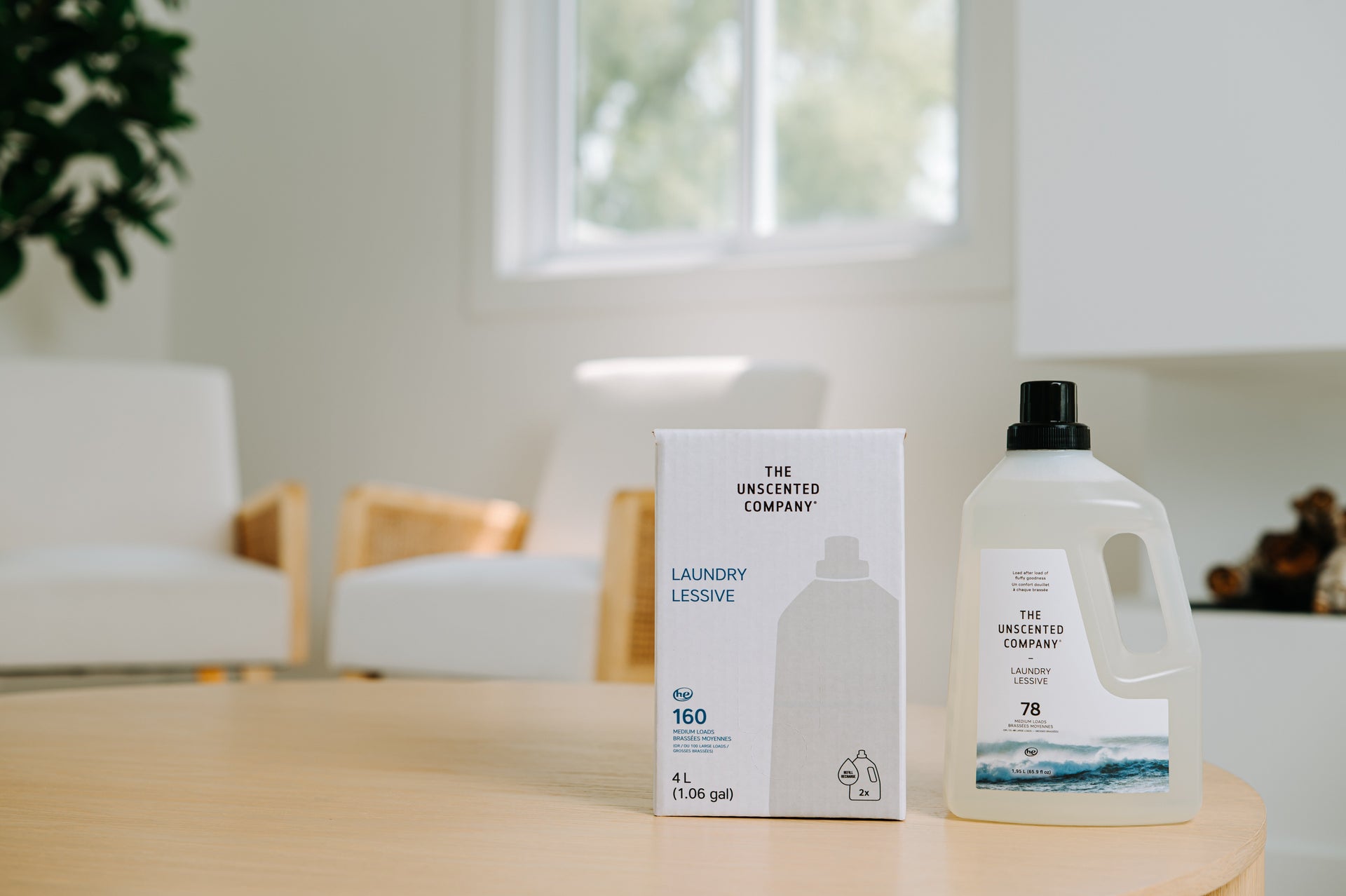
For people living with eczema, a fragrance-free laundry detergent, ideally from a brand that favors short ingredient lists and publishes complete INCI ingredient information on its product pages, is a wise choice.
If you would like to test this type of option and evaluate how your skin responds, you can explore our laundry detergent collection available in regular and refill formats.

The Special Case of Enzymes
Enzymes occupy a unique place in modern detergents. They target specific stains, such as proteins (protease) or starches (amylase), allowing manufacturers to reduce the overall amount of surfactants needed for cleaning.
For most people with eczema, enzymes do not cause issues when laundry is properly rinsed. However, a very small number of individuals may react to certain enzymes, which is why it can be useful to test a new detergent on a small batch of laundry before using it throughout the household.
Laundry Detergent and Eczema in Adults and Babies
Needs vary according to age, even though the main principles remain the same.
Laundry Detergent and Eczema in Adults
In adults, eczema often affects specific areas such as the inner elbows, knees, neck, or hands. Clothing that comes into contact with these areas, as well as bedding, should be prioritized when choosing an appropriate detergent.
Garments worn directly against the skin also deserve the most thorough rinsing. Using a smaller amount than the manufacturer recommends, combined with an extra rinse cycle, is often enough to reduce residue.
Baby Laundry Detergent and Eczema
In infants, the skin barrier is still developing. The Eczema Society of Canada notes that atopic dermatitis is often part of a broader group of atopic conditions that appear early in childhood.
For baby laundry, common recommendations include using a detergent that is fragrance-free, dye-free, and free of fabric softener. Fabric softener, in particular, leaves a coating on fibers and is one of the products most often associated with skin reactions.
As an alternative to scented dryer sheets, wool dryer balls soften fabrics mechanically without leaving any substance on the material.

Daily Laundry Habits to Adopt
Choosing a laundry detergent for eczema matters, but the way laundry is washed has just as much influence on the amount of residue left on clothing.
The following table summarizes the most useful adjustments.
|
Habit |
Common Practice |
Adjustment for Sensitive Skin |
|
Detergent Amount |
Always using a full cap |
Adjust the amount according to load size and water hardness |
|
Rinsing |
Standard cycle |
Activate an extra rinse cycle |
|
Fabric Softener |
Used routinely |
Replace with wool dryer balls |
|
Fragrance |
“Fresh” or “soft” scent |
Fragrance-free formula |
Several other simple habits can help. Empty the washing machine as soon as the cycle ends to prevent prolonged moisture buildup. Clean the drum regularly to reduce residue accumulation. Wash heavily soiled laundry separately, since it generally requires a higher detergent dose than clothing worn directly against the skin.
Conclusion
Choosing a laundry detergent for eczema relies on three complementary factors: a fragrance-free and dye-free formula, laundry habits that minimize residue, and careful label reading. No single product works for every person with atopic skin, but these guidelines can help reduce potential sources of irritation.
To explore options designed in Canada with transparent formulations, you can browse our complete laundry care collection and select the format that best fits your routine.
FAQ
What Laundry Detergent Should You Choose for Eczema?
An effective laundry detergent for eczema combines several characteristics: a fragrance-free, dye-free, and optical-brightener-free formula with plant-based surfactants. Concentration also matters, since a well-measured concentrated formula leaves fewer residues in fabric fibers. Independent certifications such as EcoLogo or MADE SAFE can serve as useful benchmarks when comparing products available on the Canadian market.
Can Fabric Softener Make Eczema Worse?
Fabric softener leaves a scented coating on fibers that remains in direct contact with the skin for hours after drying. It is one of the products most frequently associated with skin reactions in people with atopic skin, including babies. Wool dryer balls offer an alternative that softens fabrics mechanically without leaving any scented substances behind.
Should New Clothes Be Washed Before Wearing Them If You Have Eczema?
Yes, this is generally recommended for people with atopic skin. New textiles often contain chemical finishes used during transportation, storage, and retail display. A first wash using a fragrance-free detergent helps remove these substances before prolonged skin contact. This recommendation applies to underwear, pajamas, and bedding that will be used every night.