


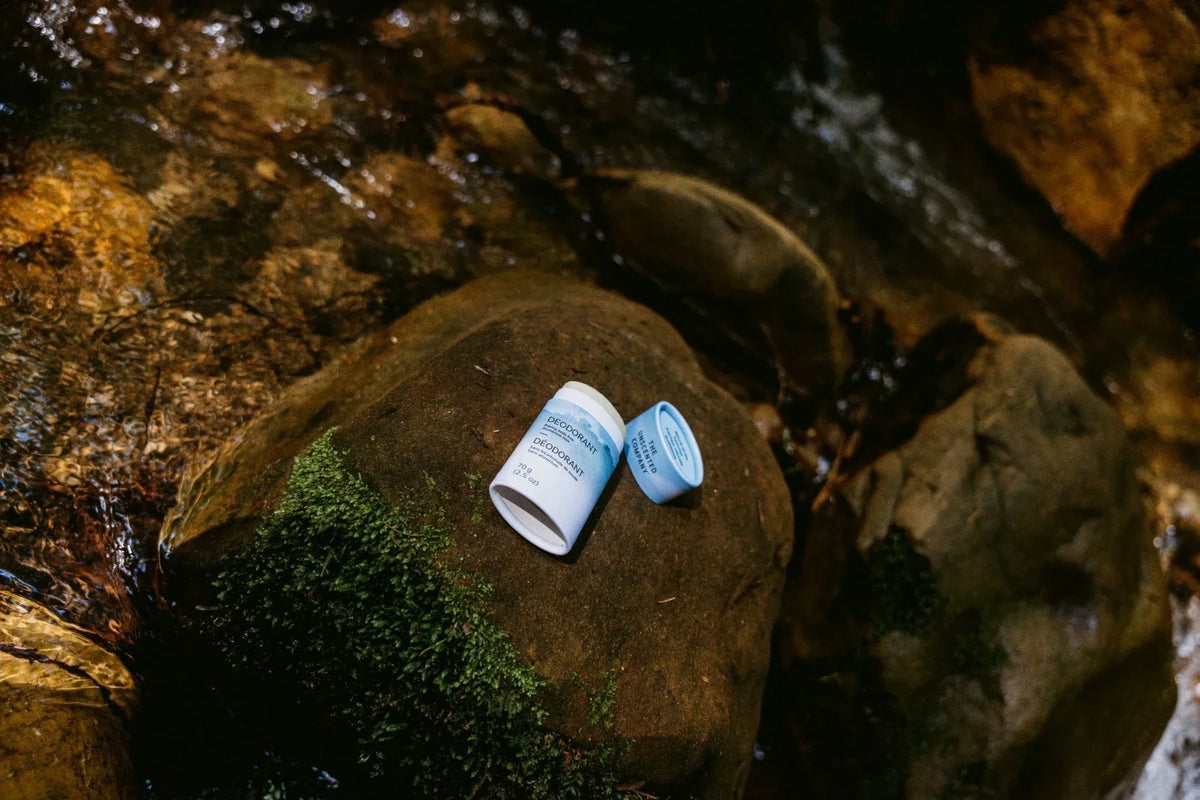
Reading a deodorant label should be simple, but most ingredient lists are written for chemists, not shoppers standing in a bathroom aisle. Knowing what to avoid in deodorant means recognizing a short list of specific terms, rather than trying to memorize an entire formula.
This guide breaks down the ingredients and label terms most worth watching for, why fragrance is often the first thing to remove, and how upcoming labelling changes in Canada will make ingredient lists easier to interpret without needing outside help every time you shop.
What to avoid in deodorant among common ingredients
Most concerns around deodorant ingredients fall into a small number of categories: aluminum compounds, synthetic fragrance, and certain preservatives. None of these are automatically dangerous at regulated concentrations, but each has a reason some people choose to avoid it.
Aluminum compounds such as aluminum chlorohydrate are what make a product an antiperspirant rather than a deodorant, since they work by temporarily blocking sweat glands. Health Canada's Cosmetic Ingredient Hotlist sets specific concentration limits and warning requirements for these compounds precisely because they are active enough to warrant regulation, not because they are broadly prohibited.
A short list of terms worth recognizing on a label:
- Aluminum chlorohydrate or aluminum zirconium complexes, which indicate an antiperspirant function
- Parfum or fragrance, an umbrella term that can represent dozens of unlisted compounds
- Triclosan, an antibacterial agent that has drawn scrutiny in several jurisdictions
None of these terms require memorizing a chemistry textbook. Once you know what each represents, scanning a label takes seconds rather than minutes, and most decisions come down to two or three ingredients that matter to you specifically.
Deodorant versus antiperspirant, and why the distinction matters
A deodorant targets odour, usually through antibacterial or absorbing ingredients, while an antiperspirant targets sweat itself through aluminum compounds. Choosing to avoid one does not mean avoiding the other, so it helps to know which function you are actually trying to limit before scanning a label.
Many products on store shelves combine both functions in one formula, which is worth checking if your goal is specifically to avoid aluminum while still managing odour throughout the day.
Why fragrance is often the first thing to remove
Fragrance is the single most common irritant flagged by people with sensitive skin, and it is also the least transparent term on most labels. A generic listing for parfum can legally represent a mixture of dozens of compounds without disclosing any of them individually.
An unscented deodorant removes this variable entirely rather than trying to identify which specific fragrance compound might be causing irritation. This matters most for people managing eczema, contact dermatitis or a known fragrance sensitivity, where trial and error with scented products can take months to resolve.

What changes with new fragrance allergen rules
Canada's labelling requirements are shifting in a way that directly affects how fragrance appears on deodorant and personal care product packaging. Under amended cosmetic regulations published by Health Canada, specific fragrance allergens must now be listed individually on labels once they exceed set concentration thresholds, rather than being grouped entirely under the single term parfum.
This means shoppers will increasingly be able to identify individual allergens directly on packaging, rather than relying on trial and error or contacting a manufacturer to ask what a generic fragrance term actually contains.
The change is being phased in over several years, starting with a first set of commonly flagged allergens before expanding to a longer list. For anyone managing a known sensitivity, that phase-in period is a reasonable time to start comparing labels more closely rather than waiting for full compliance before paying attention.
How to read a deodorant label with confidence
Ingredient lists are ordered by concentration, from highest to lowest, which gives a reliable starting point for interpreting any label. An ingredient near the top of the list makes up a larger share of the formula than one listed near the bottom.
A simple approach to scanning a label:
- Check the first five ingredients, since these represent the bulk of the formula
- Look for aluminum compounds if avoiding antiperspirant function specifically
- Note whether fragrance appears as parfum or as named individual compounds
- Scan for preservatives you may already know irritate your skin
A comparison of common label terms and what they generally indicate:
|
Label term |
What it usually indicates |
|
Aluminum chlorohydrate |
Antiperspirant function, sweat reduction |
|
Parfum or fragrance |
Unlisted fragrance blend, possible irritant |
|
Named allergens (post 2026) |
Specific disclosed fragrance compounds |
|
Sodium bicarbonate |
Common natural odour neutralizer |
Certifications and third party standards can act as a shortcut for shoppers who do not want to cross-check every ingredient on every label. Reviewing a brand's impact and certifications page is a quick way to see what stands behind a formula before comparing it to others on the shelf.

Building a fragrance-free body care routine
Deodorant rarely sits in isolation on a bathroom shelf. Soap, lotion and shampoo all contribute to the same daily fragrance exposure, so addressing deodorant alone sometimes has limited impact if every other product nearby is still heavily scented.
A simple way to reduce overall exposure without replacing everything at once:
- Start with the products used daily and left on skin longest, like deodorant and lotion
- Move to rinse-off products, like soap and shampoo, once leave-on products are addressed
- Keep one unscented option on hand for anyone in the household with known sensitivities
Our body care collection groups several of these categories together, making it easier to phase out fragrance across a routine gradually rather than all at once. Replacing one product at a time also makes it easier to notice whether skin irritation actually improves, since changing everything simultaneously leaves little way to tell which switch made the difference.
Knowing what to avoid in deodorant for good
Knowing what to avoid in deodorant comes down to a short, manageable list: aluminum compounds if antiperspirant function is the concern, fragrance if sensitivity or transparency matters most, and a handful of preservatives worth recognizing by name. Upcoming labelling changes will only make this easier over time. If fragrance is the ingredient you are working to remove first, our deodorant is formulated specifically without it.
FAQ
Is aluminum something to include on my list of what to avoid in deodorant?
Aluminum compounds are regulated by Health Canada with specific concentration limits and warning requirements, rather than being broadly prohibited. Some people choose to avoid them for personal reasons or skin sensitivity, while others use antiperspirants without issue. The distinction matters most if you specifically want to avoid blocking sweat glands rather than simply managing odour day to day, since that is the function these compounds actually serve.
Why does fragrance-free deodorant matter for sensitive skin?
Fragrance is one of the most common triggers for contact irritation, and the term parfum can legally represent dozens of unlisted compounds in a single product. A fragrance-free formula removes this variable entirely, which is often more effective for sensitive skin than trying to identify one specific problematic compound through repeated trial and error across several different scented products tested over many months at home.
Will new labelling rules make it easier to know what is in my deodorant?
Yes. Health Canada's amended cosmetic regulations require specific fragrance allergens to be listed individually on labels once they exceed set thresholds, replacing the previous practice of grouping them entirely under the term parfum. This phased change gives shoppers more specific information without needing to contact a manufacturer directly to ask what a generic fragrance term actually contains on any given store shelf today or tomorrow.