


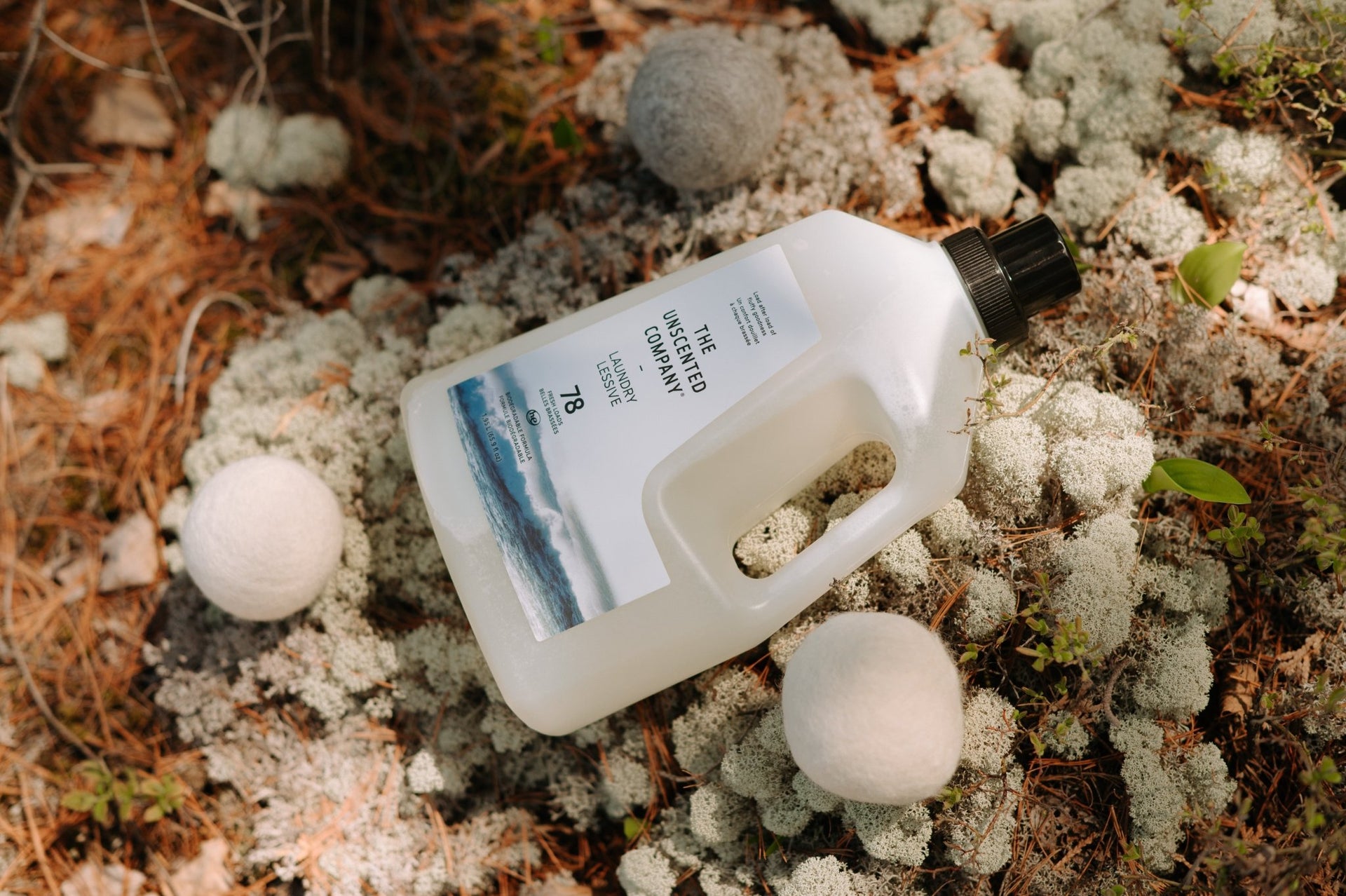
Wool dryer balls have become a common laundry room accessory. Small, dense, and made entirely of compressed wool, they replace disposable fabric softener sheets and speed up drying time.
Their success comes from a rare combination: simple mechanical action, a lifespan of several hundred cycles, and compatibility with most dryers. This guide explains how they work, outlines their concrete benefits, and details how to use them to get the most out of them.
Table of contents
- How wool dryer balls work
- What are the benefits of dryer balls
- Wool balls or fabric softener sheets
- How to use wool dryer balls
- Care and lifespan
- Conclusion
- FAQ
How wool dryer balls work
The principle is entirely mechanical. As they tumble in the drum with the laundry, the balls slip in between garments and create air pockets.
This separation has two concrete effects. First, the dryer's hot air circulates better between the fibres, which speeds up moisture evaporation. Second, the repeated friction softens fabrics, somewhat like the regular flapping motion of clothes on a clothesline.
Wool plays a particular role here. It absorbs some of the moisture and releases it gradually, which reduces the risk of localized overheating. It also stays dense enough not to lose its shape after several hundred cycles.
Three wool balls is the minimum recommended amount for an average load. For bulkier loads like a comforter or duvet, it's generally recommended to go up to six balls to maintain good air circulation.
What are the benefits of dryer balls
Wool balls offer several measurable advantages, in addition to simplifying laundry room storage.
Reduced drying time
Several comparative tests and manufacturer recommendations estimate a reduction in drying time of between 15 and 25%, depending on the load and dryer model. This reduction translates into lower electricity consumption with every cycle.
Natural Resources Canada also notes that a shorter drying time helps preserve fibres and reduces wear on clothing, in addition to lowering the energy bill. This is one of the reasons several Quebec households have adopted this alternative.
An alternative to scented fabric softeners
Unlike fabric softener sheets, wool balls add no chemical compounds to the fibres. Laundry comes out softened by mechanical action alone, with no scented residue left behind. This is especially useful for sensitive skin, babies, and towels, whose absorbency decreases with softener buildup.
For households that favour a fragrance-free routine, wool balls fit naturally into that approach.
A long service life
A well-made wool ball generally holds up for between 1,000 and 1,500 cycles before losing its shape. At five cycles a week, that works out to nearly four years of continuous use.
This longevity makes wool balls an accessory that pays for itself well over time, compared with repeatedly buying softener sheets or liquid.
An acceptable amount of noise
One question comes up often: do they make noise in the dryer? Yes, slightly, especially during the first few cycles. The sound resembles repeated soft thuds. It fades as the wool compacts with use.

Wool balls or fabric softener sheets
To give a clear picture of where wool dryer balls fit, here's a comparison on the most commonly asked-about criteria.
| Criterion | Wool dryer balls | Disposable fabric softener sheets |
|---|---|---|
| Lifespan | 1,000 to 1,500 cycles | One use per sheet |
| Added fragrance | None by default | Present in most products |
| Residue on fibres | None | Film that reduces absorption |
| Compatible with towels | Recommended | To be avoided |
| Drying time | 15 to 25% reduction | No effect on cycle length |
| Cost per use | Very low after payback | Recurring |
| Waste generated | Very little, only at end of life | One sheet per cycle |
This comparison isn't meant to suggest fabric softener sheets have no use at all. It simply shows that wool dryer balls serve several functions at once and are particularly well suited to people looking to simplify their drying routine.
If your routine still relies on disposable products and you want to try the alternative, take a look at our dedicated dryer balls section for an overview of the options made in Canada.
How to use wool dryer balls
The instructions are simple, but a few details make a difference in the final result.
Here's the recommended routine for most loads:
- place 3 to 6 balls directly in the drum, on top of the wet laundry
- select your usual cycle, with no special settings needed
- for large loads like comforters and pillows, add two extra balls
- for delicate fabrics, lower the temperature and let the cycle run a bit longer
- shake out the laundry before putting it in the dryer to free up space between items
The balls stay in the dryer between cycles. There's no need to remove them or store them elsewhere.
If you'd like to subtly scent your laundry, some people add a drop of essential oil to one ball, making sure to let it dry completely before running the cycle. This practice is optional and not recommended for baby laundry or for people with sensitive, atopic skin.

Care and lifespan
Wool dryer balls require little maintenance, but a few simple habits extend how long they last.
Occasional refreshing
Over time, fibre and lint residue can build up on the surface. Cleaning them every six months is generally enough. The most common method is to place the balls in a knotted sock, run them through the washing machine in hot water, then through the dryer.
This cycle tightens the wool fibres and restores the balls to their original density. According to wool care guidelines published by the International Wool Textile Organisation, occasional hot washing doesn't damage the fibre as long as drying is done properly.
Signs it's time to replace them
A wool ball has reached the end of its life when it starts coming apart, shedding a significant amount of fibre, or noticeably losing density. At that point, it can be replaced. Wool is a natural material that decomposes, which makes end-of-life disposal simple.
Mistakes to avoid
A few practices can shorten the lifespan of dryer balls. Washing them too often eventually makes them soft and mushy. Leaving them in an overheated dryer for hours after the cycle ends also affects their shape. A normal cycle, followed by removing the laundry within a reasonable time, is enough to keep them in good condition for a long time.
Conclusion
Wool dryer balls combine three concrete benefits: faster drying, an alternative to scented fabric softeners, and a long service life. Using them comes down to a few simple rules, and caring for them is as easy as an occasional refresh.
Want to give them a try? Our full collection of wool dryer balls brings together the available formats, made from 100% natural wool.
FAQ
How many wool dryer balls should you put in the dryer?
Three wool dryer balls are enough for an average load, whether it's everyday clothing or standard bedding. For large loads like a comforter, duvet, or pillows, six balls help maintain good air circulation and optimize drying time. Below three, the effect drops off quickly, and beyond six, no additional benefit is observed.
Do wool balls work with all dryers?
Yes, they're compatible with electric, gas, condenser, and heat pump dryers. The mechanical principle works regardless of the type of heating used by the machine. On heat pump models, cycle time is already optimized by the technology, which may slightly reduce the perceived time savings, but it doesn't affect the softening effect on laundry.
Do dryer balls damage clothing?
No, wool is soft enough that it won't damage common textile fibres like cotton, linen, or polyester. It doesn't snag fabric, unlike some plastic balls with nubs that can damage fine knits. For very delicate items, such as silk or lace underwear, a delicate laundry bag is still recommended, but the balls can stay in the drum.